Picture this: It’s the dead of night. Offices are empty, computers are humming quietly, and networks are asleep. Suddenly, an invisible intruder wakes. It doesn’t knock. It doesn’t announce itself. It crawls through cables, across servers, and into machines you didn’t even know were connected. By morning, chaos has quietly spread across thousands of systems. This is the world of Worms, malware that moves on its own, unseen, unstoppable.
Unlike viruses, worms don’t wait for you to make a mistake. They don’t need you to click a file, open an email, or download a program. They are autonomous, self-replicating, and relentless. One vulnerability, one unpatched system, and they multiply, racing across networks at a speed no human hand can match.
The Morris Worm (1988)
In 1988, Robert Tappan Morris unleashed what would become a digital earthquake: the Morris Worm. Intended as a harmless experiment to measure the size of the internet, it quickly spun out of control. Within hours, it has infiltrated 10% of all connected computers, freezing machines and paralyzing networks.
System admins scrambled, unable to stop it. People watched helplessly as machines they relied on for work, communication, and research slowed to a crawl or stopped entirely. It was the first time the world truly realized that a silent, invisible force could disrupt everything connected to the digital world.
This incident didn’t just cause damage, it changed the landscape of cybersecurity forever. The Morris Worm prompted the creation of the first Computer Emergency Response Team (CERT), establishing a blueprint for how the world would respond to future malware outbreaks.
How Worms Work?
Worms may seem like digital ghosts, but their mechanics are fascinatingly precise. They operate in four critical stages:
Entry:Worm exploit vulnerabilities in software, operating systems, or network configurations. For example, outdated Windows systems in the early 2000s allowed worms like Code Red to slip in. Worm don't need humans to open files; they exploit weak spots in the system itself.
Replication:Once inside, worms clone themselves, often writing multiple copies across different directories or network locations. They can even attach themselves to shared drives or removable media. Unlike viruses, which rely on users, worms self-propagate, spreading silently and exponentially.
Scanning:Worms are active hunters. They scan local networks and connected systems for machines with security gaps, such as:Outdated softwareOpen softwareWeak passwordsMisconfigured firewalls
This scanning allows them to move rapidly, sometimes infecting thousands of systems within hours, far beyond the reach of traditional viruses
Payload:While some worms simply replicate, others carry destructive payloads. The payload can:Delete or corrupt filesInstall backdoors, giving hackers remote control over the systemLaunch Distributed Denial of Service (DDoS) attacks, overwhelming networks and serversHarvest sensitive data, silently sending it to attackers
The danger lies in their autonomy and scale. One weak system can allow a worm to infiltrate entire networks, effectively turning them into digital weapons of mass disruption
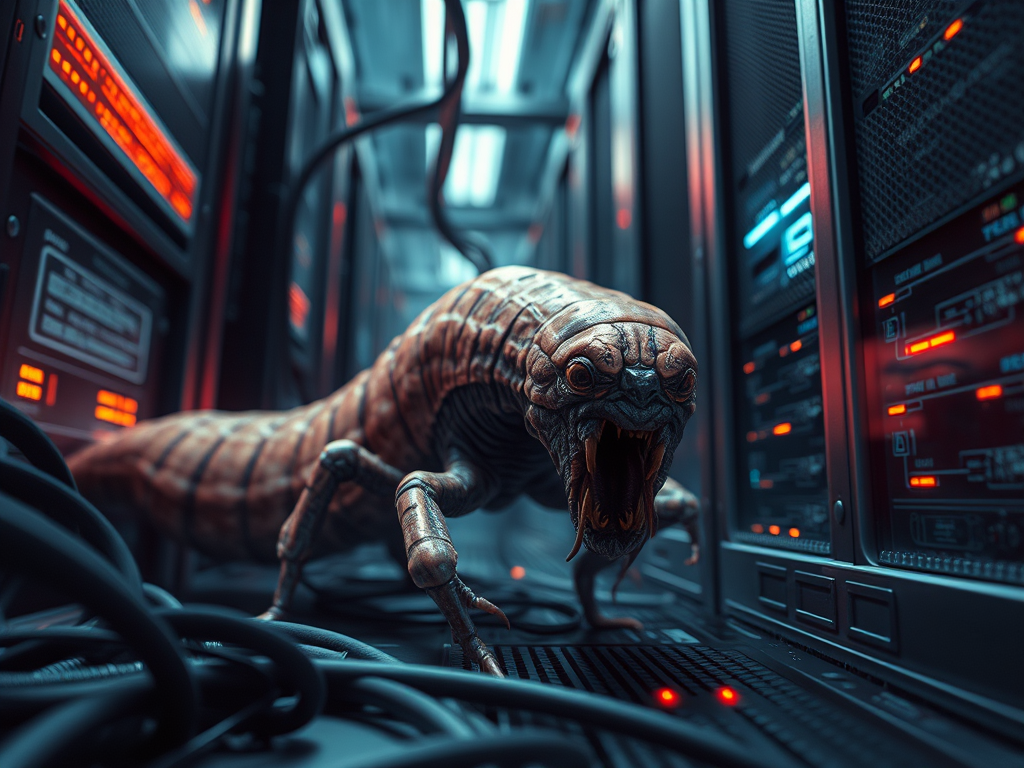
Worms taught the digital world a chilling truth; networks themselves could be weapons. One flaw, one vulnerability, and a silent crawler could spread havoc faster than anyone imagined.
Next, we will explore Trojans, malware that doesn’t crash your system or spread by itself, but sneaks in disguised as something harmless, waiting patiently for the perfect moment to strike.

 Turn Projects
Leave a comment