What it is, what is on it, and why it matters
When people hear “Dark Web”, they imagine a mysterious underworld where hackers rule and secrets are sold in the shadows. And they’re not entirely wrong.
But what is the dark web, really?
The Layers of the Web
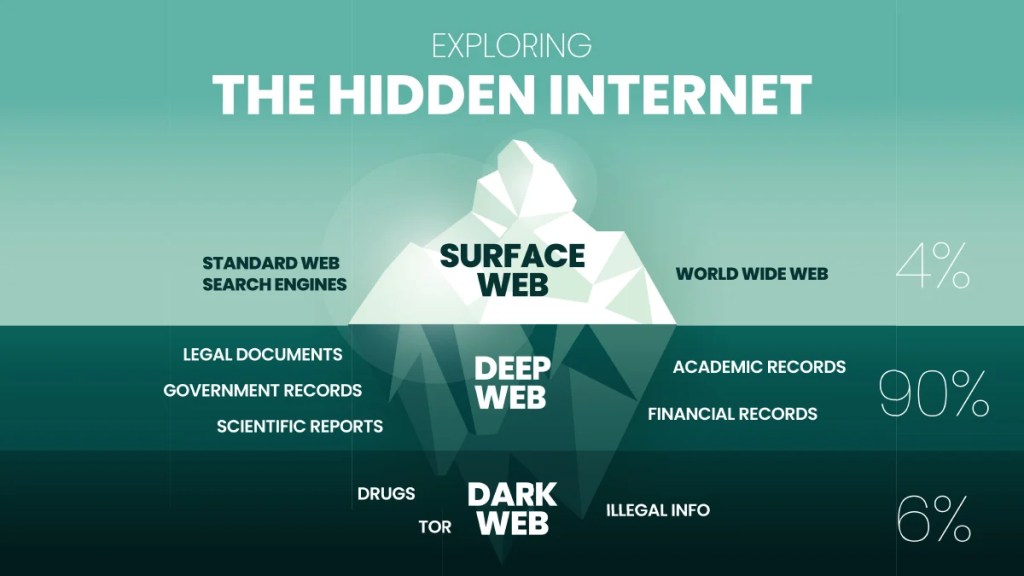
The internet has layers:
- Surface Web: Everything indexed by search engines like Google. News articles, social media, YouTube. This is where most people live online
- Deep Web: Anything behind a login.
- Think: Emails, bank accounts, academic databases
- Dark Web: A small part of the deep web that is intentionally hidden and only accessible via special software like Tor (aka The Onion Router)
The dark web isn’t inherently illegal but it is where anonymity thrives, and that attracts all kinds of users
What is actually on the Dark Web?
Some things you’ll find include:
- Black markets: Illicit trade involving narcotics, counterfeit currency, forged identification documents, and malware services.
- Data dumps: Leaked personal info, passwords, credit card numbers
- Hacker forums: Sharing tools, selling exploits, and trading techniques
- Espionage tools: Spyware, zero-day exploits, nation-state actors
- Whistleblower platforms: Places like SecureDrop or hidden Wikileaks mirrors
It’s not just crime but the illegal activity is what dominates headlines
How do people access it?
Using Tor Browser, users can access .onion sites that don’t appear on normal browsers. Tor routes traffic through multiple layers of encryption, making it very difficult to trace activity back to the user
But anonymity cuts both ways, it protects journalists in oppressive countries, and it hides criminals doing real damage.
Exactly like a double edged sword
Real World Risks
Even if you never visit it, the dark web can still touch your life:
- Your stolen passwords could be sold in breach dumps.
- Your credit card info might be listed in carding forums.
- Your medical records could be auctioned off to the highest bidder.
- Your company’s internal files might end up exposed after a ransomware attack.
So… Can it be stopped?
Not really. The Dark Web is decentralized and global. Taking it down would mean destroying the very tools that protect privacy and freedom of speech.
What can be done is better security practices, early breach detection, and educating people on how their data flows online.

 Turn Projects
Leave a comment